
Related news


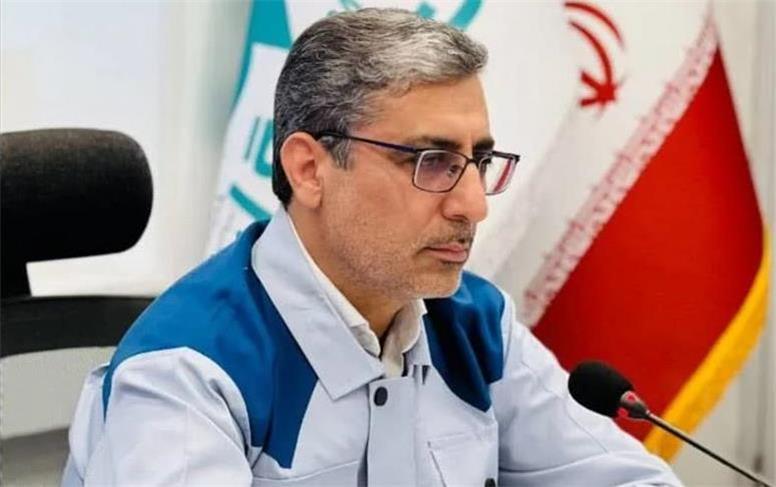
Iran’s Economy and a Critique of the Role of the Mining Sector in the Seventh Development Plan Ali Rasoulian, CEO of SSMIC
Development, in its broadest sense, encompasses multiple dimensions, with the economy being one of its key aspects. Alongside politics, culture, and society, the economic outlook—whether neoliberal, socialist, or hybrid—can shape distinct paths of development.
Despite possessing diverse potentials, Iran’s economy has failed to fully utilize its capacities due to various factors. Beyond international sanctions, one of the most significant issues has been the dominance of a state-controlled, directive economy and reliance on a single product. The nationalization of the oil industry, while strengthening national pride and serving as the primary driver of the economy for decades, has in recent years become a burden. Dependence on oil, a common trait among developing nations, led to neglect of other sectors such as mining, steel, and agriculture. The state-driven economic mindset, a direct outcome of oil dependency, has proven ineffective in competing with free-market economies. Historical failures of import substitution in Latin America, the collapse of the Soviet Union, and China’s post-Mao reforms toward market liberalization all serve as evidence. Yet, free-market economies have also faced turbulence, from the early 21st-century financial crisis in the U.S. to Donald Trump’s trade wars against China, Europe, Canada, and Mexico, which violated global free trade principles. These realities highlight the need for new economic strategies based on safeguarding national interests. For Iran, under severe sanctions, redesigning and restructuring economic policies in line with current realities is imperative.
The Seventh Development Plan: Reality and Implementation
Although the seven national development programs reflect a state-driven economic framework, they represent at least an effort to diversify the economy. A key step is reducing dependence on oil and increasing the role of other sectors, particularly mining.
Iran, rich in mineral resources, holds 68 confirmed and 81 potential types of minerals, accounting for about 7% of global reserves—37 billion tons proven and 54 billion tons potential. Positioned within the Alpine-Himalayan metallogenic belt, Iran hosts 35 of the world’s 45 mineralization environments and 89 of 114 mineral types globally.
While copper, aluminum, nickel, molybdenum, and silver are strategic today, technological advances and market demand have expanded the list to include lithium, cobalt, and gallium. Overreliance on steel and copper risks replicating the oil-dependent model within industry.
The Seventh Development Plan (2024–2028), spanning 22 chapters and seven sections, is comprehensive, covering nearly all key national domains. It sets quantitative targets, emphasizes fiscal reforms, reducing budget deficits, controlling debt, privatizing state-owned companies, improving transparency, and promoting social justice. Yet challenges remain: unclear implementation models, insufficient financing, government and banking debts, reliance on central bank borrowing, currency and stock market volatility, inflation, external shocks such as sanctions and tariffs, limited institutional coordination, and environmental sustainability concerns.
The plan projects average economic growth of 8%, with total factor productivity growth at 2.8%, contributing 35% to overall growth. Oil sector growth is set at 9%, with oil exports rising 12%, compared to 23% growth in non-oil exports, 13% in mining, and 8.5% in industry. While balanced on paper, oil remains the dominant source of revenue. Inflation and liquidity are targeted at 9.5% and 13.8% respectively. Achieving these goals under current conditions appears highly challenging. Mining is positioned as a leading sector, aiming to fulfill the slogan “Mining instead of Oil,” but statistical comparisons with current realities suggest difficulties in execution.
Mining Sector Challenges
Of Iran’s $27 trillion mineral reserves, only 2% has been exploited. Achieving projected values under sanctions, energy shortages, and limited investment is far more difficult than stated. The plan forecasts 308 billion tons of iron ore reserves and extraction of 137.5 million tons, aligned with producing 55 million tons of steel annually. Yet energy imbalances and unrealistic foreign exchange targets undermine feasibility.
Copper reserves exceed 20 billion tons, but current production is 1.7 million tons of concentrate and 360,000 tons of cathode. Two-thirds is consumed domestically, with one-third exported. The plan targets 3.4 million tons of concentrate and 800,000 tons of cathode, requiring significant infrastructure expansion.
Aluminum production reached 604,526 tons last year, down 4.8% from the previous year. The plan’s target of 1 million tons faces similar constraints as copper and steel.
Though quantitative targets are clearly stated, the plan’s abstract nature raises concerns about alignment with economic realities.
Energy Imbalances: The Industry’s Achilles Heel
Energy imbalance has become the greatest challenge for Iran’s industry and mining sectors. Power and gas outages have reduced net profits by over 40%. Production stoppages due to energy shortages cost the mining and steel sectors $3–6 billion annually, totaling $13 billion over the past four years. Electricity imbalance has grown from 3,000 MW in 2011 to 24,000 MW in 2025, while gas imbalance rose from 100 million cubic meters to 400 million cubic meters. Rising energy costs and restrictions across the steel value chain have alarmed industry stakeholders.
Although producing 60 million tons of steel by 2025 is theoretically possible, energy challenges cast doubt on feasibility. The plan sets total energy optimization at 1.285 million barrels of oil equivalent per day, with industry and agriculture accounting for 334,000 barrels (26%). Achieving the steel target requires $84 billion investment in gas and $80 billion in electricity, plus rail infrastructure investment—an immense challenge under current conditions.
This analysis underscores that while the Seventh Development Plan seeks to diversify Iran’s economy and elevate mining as a strategic sector, structural challenges—particularly energy imbalance, financing, and sanctions—pose serious obstacles to its realization.
Final Remarks
The Seventh Development Plan was drafted and issued while the six previous plans were never fully implemented. Although certain adjustments have been made in this plan, its overall structure can be seen as a seemingly optimized version that, in several areas, does not align with the realities and current conditions of the country. Its theoretical aspects outweigh its practical and operational dimensions. While greater attention has been given to the mining sector and statistical targets have been presented, the necessary foundations for quantitative and qualitative growth remain unclear. Moreover, challenges in financing mining development projects and exporting final products continue to burden the industry. Considering the energy imbalance, the contraction of the national economy in recent years, minimal success in attracting foreign investment, rising investment risks, and the limited time of just over two years until the end of the Seventh Plan, its realization appears difficult.
In today’s world, external shocks can directly affect national economies. To safeguard Iran’s economy and industry from predictable consequences of international policies, serious action is required to lift sanctions, which remain a critical economic threat. The “butterfly effect” of Iran’s economy—where changes in other countries’ economic policies have significant impacts domestically—underscores the need for realistic acceptance of current conditions, practical solutions, scientific planning, and the adoption of modern technologies. Mining and mineral industries, as seen in countries such as Chile, Brazil, Australia, and Ukraine, have become major economic drivers. With Iran’s vast capacities, this sector can play a similarly decisive role. Achieving reasonable growth in mining and mineral industries requires substantial changes in policies and operational programs.
Additionally, a shift in foreign policy and strengthened economic diplomacy are essential to lift sanctions, balance economic relations with East, West, the Middle East, and Eurasia, and actively participate in regional alliances such as BRICS and the Shanghai Cooperation Organization. These steps can diversify target markets, spread the impact of sanctions across a broader scope, and improve industrial and economic conditions.
In this context, the Ministry of Industry, Mine and Trade (MIMT) plays a crucial role as one of the main authorities responsible for implementing the plan, particularly in currency and customs policies. Currently, MIMT has taken significant steps by drafting strategies across various domains and designing complementary programs to address existing gaps. Its proactive and dynamic approach has raised optimism about the role of mining and industry in Iran’s economy. The ministry’s scientific and expert-driven orientation can be a major step toward transitioning from a single-product economy to a multi-product one, expanding the export basket, and diversifying foreign currency sources. Such measures can partially mitigate the impact of financial sanctions and pave a smoother path for the realization of the Seventh Development Plan.