Related news



Global Steel Production: From Capacity Growth to Competition for New Competitive Advantages
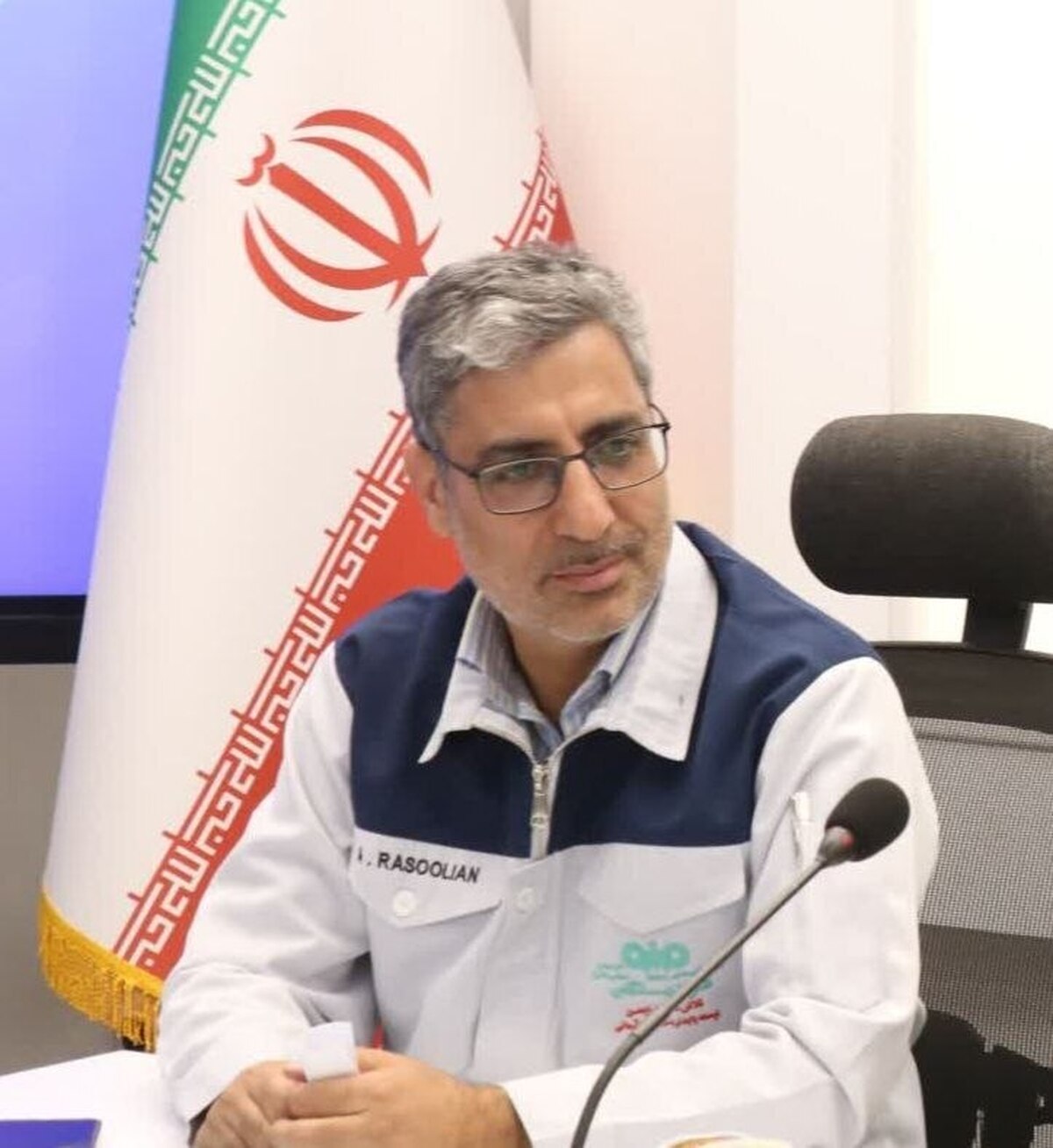
Ali Rasoulian, CEO of Sangan steel company
Global Steel Production: From Capacity Growth to Competition for New Competitive Advantages
In recent years, as the Fourth Industrial Revolution has become firmly established, technology-driven companies have attained the highest positions in terms of value creation and influence across global markets. Nevertheless, steel—alongside oil and petrochemicals and, increasingly, advanced technologies—remains one of the key indicators of industrialisation, infrastructure development and national economic strength. The nature of competition in the steel industry, however, is changing. The issue is no longer simply how much steel a country can produce. Given the rapid advancement of new technologies, their effective deployment to improve profitability and product quality and to expand sales markets has become unavoidable. According to the World Steel Association, the competitiveness of the steel industry is shaped by a combination of energy costs, quality, productivity, technology, carbon intensity, market access and the ability to manufacture higher-value-added products; together, these factors determine the relative position of countries in the global steel market.
Global Economic Conditions and Their Impact on Industry
At the same time, the global economy has become increasingly volatile amid military and geopolitical tensions in Ukraine and the Middle East. Expert forecasts and the International Monetary Fund have consequently revised down their projections for global economic growth in 2026 to 2.5% by the end of the year. Growth in emerging and developing economies is expected to reach 3.6%. The IMF has also indicated that economic growth in the Middle East is facing a sharp slowdown and could approach zero. According to the Fund’s projections, the global economy will expand by nearly US$25 trillion between 2026 and 2030. The United States, with a projected GDP of US$37.7 trillion, is expected to account for 25.1% of the world economy by the end of 2030, while China, with a projected GDP of US$26 trillion, would account for 17.3%.
Energy, Geopolitical Risks and Industrial Demand
The shocks arising from these two wars have had their strongest effects on energy markets, the resilience of food production and fertiliser prices. Europe and Southeast Asian countries appear likely to face some of the greatest pressures arising from energy-market volatility. The Strait of Hormuz, as one of the world’s critical energy chokepoints, is therefore an important factor in economic volatility and weaker growth, since the oil, steel, petrochemical, food and even technology industries are to a significant extent dependent on the flow of energy exports through Hormuz.
Against this backdrop, the World Bank has forecast that the price of Brent crude oil will rise by 36% compared with 2025, reaching an average of US$94 per barrel by the end of 2026. Natural gas delivered to Europe is also expected to increase by around 30% because of reduced global access to LNG, while fertiliser prices are projected to surge by 38% this year. These increases will place considerable pressure on national economies, while global markets remain attentive to the Federal Reserve’s decisions on interest rates. If inflation in the US rises, monetary conditions could remain restrictive for at least a short period. At the same time, the prospect of climate- and weather-related events associated with El Niño, such as the devastating floods in Nepal, could place additional pressure on infrastructure and agricultural budgets, particularly in developing countries and the Global South. Collectively, these factors could move in the opposite direction to industrial recovery, affecting steel demand and, ultimately, the entire production chain.
Changes in the Global Steel Industry
The global market has entered a period of structural adjustment in recent years, creating a significant constraint on the growth of steel demand. Under these conditions, energy and economic volatility affects consumption demand across industries dependent on steel. Following several years of stagnation, global steel demand is forecast at approximately 1,724 million tonnes in 2026 and 1,762 million tonnes in 2027—equivalent to growth of 0.3% in 2026 and 2.2% in 2027.
From Volume Growth to Competition on Cost and Quality
These figures indicate that the era of rapid growth in steel demand has come to an end and that competition for market share, cost efficiency and quality will intensify. Nevertheless, the slowdown in the contraction of demand in China and the continuation of demand growth in India are encouraging signals. Given China’s role in more than 50% of global steel production and demand, the outlook for the steel market in 2027 may improve. Even so, demand growth in China is still expected to lag behind the projected global growth rate of around 4%, particularly in North America, Europe, Japan and India. China nevertheless remains the dominant market player, while signs of a structural transformation in its production system are becoming increasingly visible.
China’s crude steel output reached more than 960.8 million tonnes in 2025, down 4.4% from 2024. The downturn in the property market, capacity-control policies and environmental pressures are among the principal drivers of this trend, and the property market will remain a major challenge for China’s steel industry. India, by contrast, is following a different trajectory and is experiencing the fastest growth among the major steel markets. The World Steel Association estimates that Indian steel demand will grow by 7.4% in 2026 and 9.2% in 2027.
Accordingly, the centre of gravity of industry growth is gradually shifting from mature economies and China towards India, Southeast Asia, Africa and selected developing economies. At the same time, global steel production faces excess capacity, relatively weaker demand compared with the pre-COVID-19 period, and increasingly restrictive trade policies. High Chinese exports are putting pressure on producers in other countries, while governments are turning to instruments such as tariffs, quotas and carbon-related requirements to protect domestic production.
Under these conditions, the successful steelmaker is not necessarily the largest producer. Rather, it is the producer capable of supplying the right product for the market at a competitive cost and with an acceptable carbon footprint.
Where Does Iran Stand in the Industrial Equation?
Iran has distinctive advantages in terms of natural resources and direct-reduction technology. According to World Steel Association data, Iran’s direct reduced iron (DRI) production was estimated at approximately 37.2 million tonnes in 2025, making the country one of the world’s significant players in the DRI value chain. This advantage is underpinned by access to natural gas and iron ore, together with the development of direct-reduction technologies.
However, Iran’s gap with its principal competitors is less about its ability to create production capacity than about its ability to operate that capacity sustainably and economically. The country’s competitive position therefore needs to be reconfigured around reliable, efficient and economically viable utilisation of existing and future capacity.
Regional Competition and Iran’s Areas of Differentiation
India, with its rapid demand growth and heavy investment in infrastructure and steel, will seek a larger share of Iran’s regional markets. In previous years, a different form of competitive pressure—particularly heavy dumping of Russian steel—contributed to the loss of a significant portion of Iran’s steel export markets. Turkey is also a competitor in surrounding markets because of its geographical position, export capabilities and production flexibility, and it continues to hold a significant position in international steel production and trade.
Iran’s competitive advantage should therefore focus on areas where meaningful differentiation is possible: higher-value-added products, low-carbon steel based on DRI, development of the value chain from mining to finished products, and reductions in logistics and energy costs.
Where Are We Heading?
The outlook for the next two years can be characterised as low growth accompanied by a changing geography of growth. Global steel demand is expected to accelerate in 2027, but most of this growth is likely to occur outside China. India will be the most important demand engine in this environment. In developed economies, a gradual recovery in demand may also emerge, supported by industrial infrastructure, defence-related investment, industrial capital expenditure and growing demand from the electric-vehicle industry.
Implications for Iran
For Iran, these conditions can be regarded as an opportunity insofar as growth in Asian and regional markets could strengthen exports of steel products. At the same time, continued instability in the Middle East, increasing steel supply from other producing countries, and pressure on prices and profit margins could reduce the benefits of this opportunity.
For this reason, forecasting Iran’s industrial future solely on the basis of higher production capacity is not sufficient. New plants must be accompanied not only by quantitative expansion but also by improvements in product quality, so that production stability and competitiveness can be strengthened simultaneously. Achieving this requires attention to infrastructure, sales markets and investment mobilisation.
Meanwhile, the global steel industry is moving towards low-carbon production, energy-efficiency optimisation, smart manufacturing and advanced products, supported by continuous investment. Keeping pace with these global development trends is therefore a necessity.
Transforming Iran’s Export Structure
Iran’s export structure also requires adjustment. The sale of semi-finished products in international markets generates less value added than the export of high-quality and specialised products and leaves the country more exposed to fluctuations in global prices.
The future of Iran’s steel industry should not be defined by competition over the highest production volume, but by competition over the lowest-cost, most reliable and highest-value-added products. The global industry is moving towards green steel, digitalised plants, higher productivity and regional supply chains.
Iran has a favourable starting point because of its access to iron ore, relatively lower-cost natural gas and substantial experience in direct reduction. Maintaining this advantage, however, will require intensified efforts. A suitable strategy for sustaining production and competitiveness could include securing a reliable energy supply through dedicated and renewable power generation, raising productivity and optimising energy consumption, moving from basic products towards high-quality and alloy steels, expanding rail transport and export infrastructure, and investing in carbon-reduction and smart-manufacturing technologies.
The operationalisation of this strategy is currently linked, among other factors, to resolving the situation in the Middle East and making greater use of economic diplomacy and the potential of regional agreements and organisations such as the Shanghai Cooperation Organisation and BRICS.
Conclusion
The global steel market is entering a mature phase in which volume growth will be limited, while competition on quality and efficiency will intensify. Iran’s future competitive advantage must evolve from inexpensive energy and natural resources towards reliable energy, high productivity, advanced technology, higher-value-added products and low-carbon steel. Otherwise, the contribution of capacity expansion to the development opportunities of the steel industry and the wider economy will gradually diminish.