
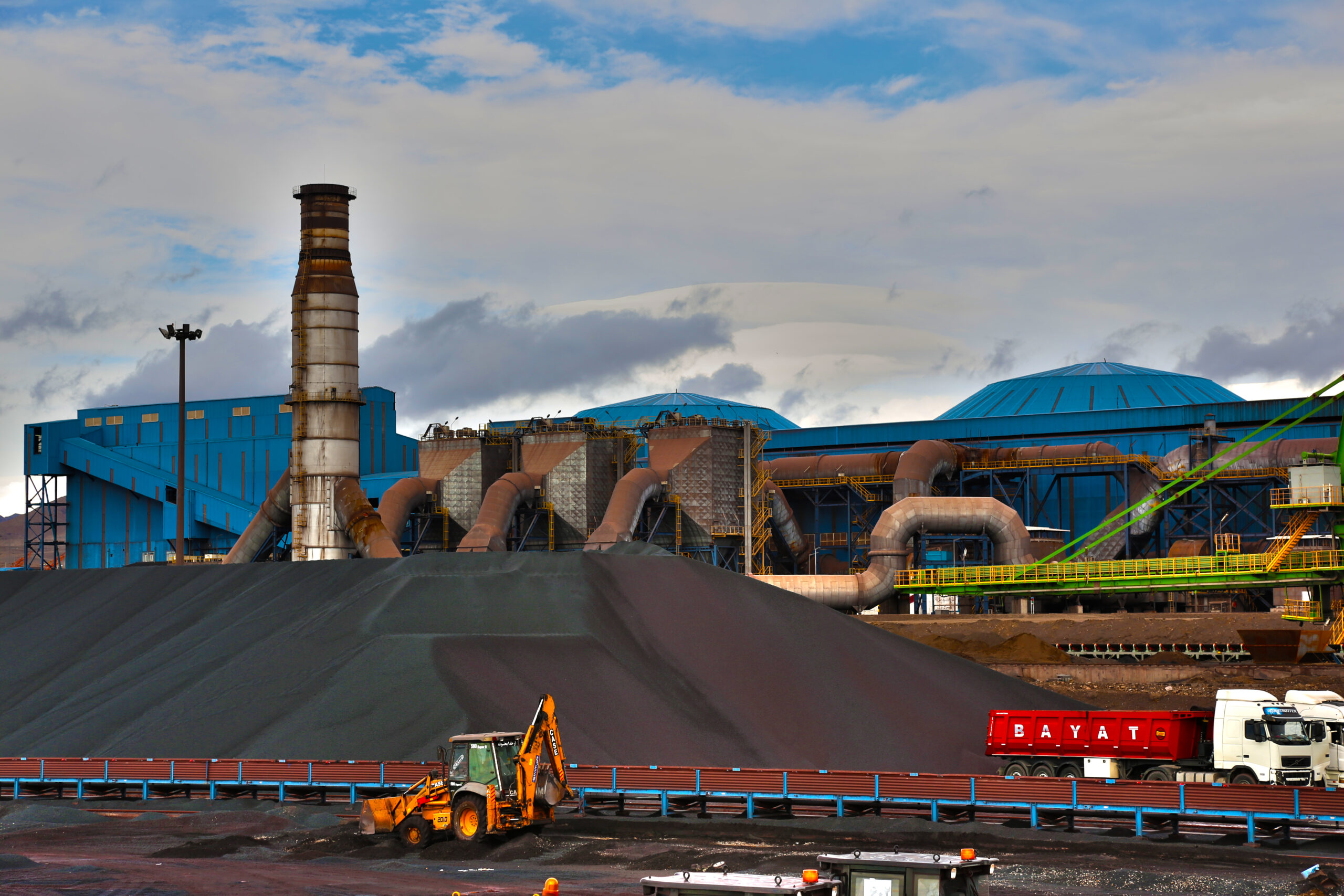
1- Productivity: Sangan steel’s Management Logic and Strategic Advantage
In the steel industry, productivity means more than increasing output. Scientifically, productivity describes the relationship between output and the inputs consumed to produce it. It can therefore be improved by increasing output with the same resources, producing the same quantity with fewer resources, reducing waste and downtime, improving quality, lowering unit costs, and increasing process reliability. Productivity is especially important in mining and steel industries because of their intensive use of energy, water, raw materials, capital, and equipment.
Steel companies operate under constraints in the supply of key inputs, energy imbalances, logistics challenges, and market changes. These conditions make more effective use of existing capacity essential. Productivity is no longer merely a retrospective performance indicator; it can become a basis for decision-making and production-risk management. Planning to maintain production despite constraints in iron ore, electricity, gas, and transport; diversifying sources and markets; investing in energy and water; expanding capacity while safeguarding quality; and using technology and data can all form part of an integrated productivity approach.
Sangan steel company does not pursue productivity solely through higher tonnage. It can also be assessed in terms of value creation, production continuity, and more effective use of existing resources and capacity. The annual targets of 5 million tonnes of concentrate and 5 million tonnes of pellets are important operational objectives, but they are not sufficient on their own to assess productivity, because the gap between nominal capacity and actual output is affected by variables across the entire value chain.
Nominal capacity is converted into economic value only when raw materials, energy, equipment, water, personnel, transport, working capital, and sales markets are available in a coordinated manner. A productivity-oriented approach at Sangan steel company can therefore be understood as a shift from production volume alone towards the economics of production. Operational decisions should be assessed simultaneously in terms of output, quality, cost, resource consumption, and shutdown risk. Even a decision that increases short-term costs may improve productivity economically if it prevents a chain-wide shutdown, the accumulation of fixed costs, and lost sales.
One important dimension is the link between productivity, risk management, and continuity of production. External constraints on feedstock, energy, logistics, and other inputs can affect operating units. A production decline does not merely mean the loss of some output; it can also reduce capacity utilization, increase fixed costs per tonne, lower sales, and weaken profitability. The cost of a shutdown should therefore be considered alongside the cost of securing inputs. This perspective links productivity with resilience. A company that reduces the impact of shocks to feedstock, energy, logistics, or markets is making more effective use of its existing capacity.
Productivity at Sangan steel company can consequently be assessed through indicators such as reduced downtime, higher equipment availability, lower resource waste, production continuity under constrained conditions, and improved operational predictability—not only through the volume of final product. Geography and logistics are also important. The company’s proximity to major iron ore reserves is an advantage in raw-material access, but its distance from major industrial centres and ports increases logistics costs and risks. Productivity must therefore encompass the entire chain, from extraction and iron ore supply through processing, energy, water, transport, and markets.
This value-chain perspective is important because it focuses on the performance of the entire system rather than optimizing each unit separately. Increasing capacity in one part of a steel chain without resolving transport or energy bottlenecks may not create proportional economic value. Investment has the greatest productivity impact when it addresses the system’s actual bottleneck and improves coordination among different stages.
Energy is one of the most important pillars of productivity and production continuity. Energy imbalances are among the major operational risks facing Iran’s steel industry, and the country’s electricity shortfall has been reported at more than 21,000 MW. In this context, Sangan steel’s 200 MW wind farm should not be viewed merely as a power-generation project. It is part of an approach to reducing dependence on the grid, improving energy security, and lowering the probability of production stoppages. The productivity value of the investment is not limited to the volume of electricity generated: more reliable energy can reduce downtime, increase equipment utilization, and make production schedules more predictable.
Water is another key resource. Industry accounts for approximately 3.3% of national water consumption, while agriculture accounts for the largest share. Even so, water management is critical for Sangan steel. The recycling of approximately 85% of the water used at its plants is an example of resource productivity. Its significance lies not only in reducing water consumption but also in strengthening production continuity under resource constraints. Projects to collect and treat wastewater from Taybad and transfer water to the Kerat Plain and then to Sangan steel, as well as participation in the Oman Sea water-transfer project to Khorasan Razavi, show that the company’s water strategy extends beyond reducing consumption inside the plant to securing water resources at a strategic level.
Capacity expansion can contribute to productivity only when quality and cost are considered at the same time. Sangan steel’s hematite concentrate project, with approximately 52% physical progress, is an example of development accompanied by modern technologies and scientific management methods. Development should not simply mean adding capacity; productive expansion must target output, product quality, and unit cost together. Intelligent dispatching, online monitoring, predictive maintenance, inventory control, strategic stockpiling of critical spare parts, and reduced waste and rework can complement capacity expansion.
These tools shift management away from reacting after a problem occurs and towards early identification of deviations and prevention of stoppages. Data are not used merely to report production; they become a basis for decisions about bottlenecks, downtime costs, consumables, and unused capacity. The same approach applies to human capital and technology. Equipment and energy productivity cannot be sustained without workforce productivity. Training, succession planning, technical skills development, safety culture, incentive systems, and employee participation in process improvement are all components of a productivity model.
Digital transformation and new technologies can further change the nature of productivity. Employees’ ability to work with data, automation, predictive maintenance, quality control, and intelligent systems is becoming part of the productivity infrastructure. Productive management at Sangan steel company should therefore be understood as a combination of technology, processes, and human capital, not simply the purchase of equipment or expansion of capacity.
Finally, production productivity becomes economic value only when products are sold in the right market and on acceptable economic terms. Diversifying domestic and export markets and offering products through the commodity exchange are therefore important elements of sales resilience. These measures can reduce revenue-concentration risk and give the company greater flexibility in response to recessions, price changes, and shifts in customers’ production plans.
Productivity at Sangan steel company is thus not merely a technical concept; it extends from the beginning of the supply chain to the end of the value chain. Production volume, selling prices, energy costs, raw-material prices, transport expenses, and market conditions jointly determine the economic outcome of operations. The company’s targets of 5 million tonnes of concentrate and 5 million tonnes of pellets, its 200 MW wind farm, recycling of approximately 85% of water, water-transfer projects, the hematite concentrate project, alternative feedstock sources, market development, and entry into mining can all be viewed as elements of a shared approach.
Together with technology, data, predictive maintenance, and human-capital development, these measures are intended to strengthen the company’s ability to produce sustainably, use resources more efficiently, and reduce vulnerability to external shocks. Productivity at Sangan steel company cannot be reduced to a single indicator such as tonnage or consumption of one input. It encompasses production continuity, lower downtime, bottleneck management, energy and water security, feedstock and market diversification, technology, product quality, and human capital. The distinguishing feature of this approach is a shift from producing more to creating greater value. In this model, decisions are based on data, risk management, bottleneck removal, waste reduction, and resilience. The company’s advantage is therefore not limited to access to the region’s mineral reserves; it lies in its ability to turn that advantage into a sustainable, flexible, cost-effective, and reliable production chain.