
1- Productivity: Sangan steel’s Management Logic and Strategic Advantage
1- An Analytical Look at Customer Centricity at Sangan steel
From Product Quality to a Different Delivery Experience
When an industrial product is destined for the next stage of the steel value chain, customers look beyond price. Consistent quality, reliability, delivery discipline, and even ease of loading all influence purchasing decisions. Recent reports on Sangan steel company indicate that customer centricity is reflected not merely in corporate slogans but in production, quality control, and product-dispatch processes. Together, these factors can help retain customers and strengthen the company’s position in the steel chain.
A steelmaker is likely to return to a supplier when it can trust that the product delivered today will have the same quality and specifications tomorrow. This is particularly important in mining and steel industries. Pellets and concentrate are not products that remain on a retail shelf; they enter another production process directly, and even minor quality fluctuations can affect downstream operations. Sangan steel’s approach begins with the product but does not end there. Alongside producing high-quality materials, the company focuses on process control, continuous monitoring of product specifications, and development of transport and loading infrastructure. Market diversification is also part of this approach: customer centricity means not only retaining an existing buyer but also understanding market needs and enabling different customers to access the product.
Quality Must Be Predictable for the Customer
Sangan steel company has sought to ensure that quality control is not limited to testing the finished product. In quality engineering, control begins with the receipt of raw materials, and sampling and testing data are subsequently used to monitor the process. The company’s laboratory has also obtained ISO/IEC 17025 accreditation, a standard that emphasizes laboratory competence and the reliability of test results.
For an industrial customer, it is not enough for a product to meet specifications once. What matters more is consistency over time. If pellet or concentrate specifications fluctuate repeatedly, the consuming plant must readjust its process for each shipment. The more predictable the product, the lower the customer’s operational risk. Sangan steel company has emphasized this issue in its production-performance reports. Improvements in quality indicators, the formation of specialist quality-control teams, and continuous parameter monitoring have been part of the company’s efforts to bring products closer to customer requirements. In this way, the customer’s voice is transferred from technical product specifications to the production line.
This is one of the foundations of customer satisfaction. Customers recognize that a producer takes their needs seriously when those needs are reflected not only in the sales department’s discussions but also in production and quality-control decisions.
Customer Centricity Is About More Than Pellet Quality
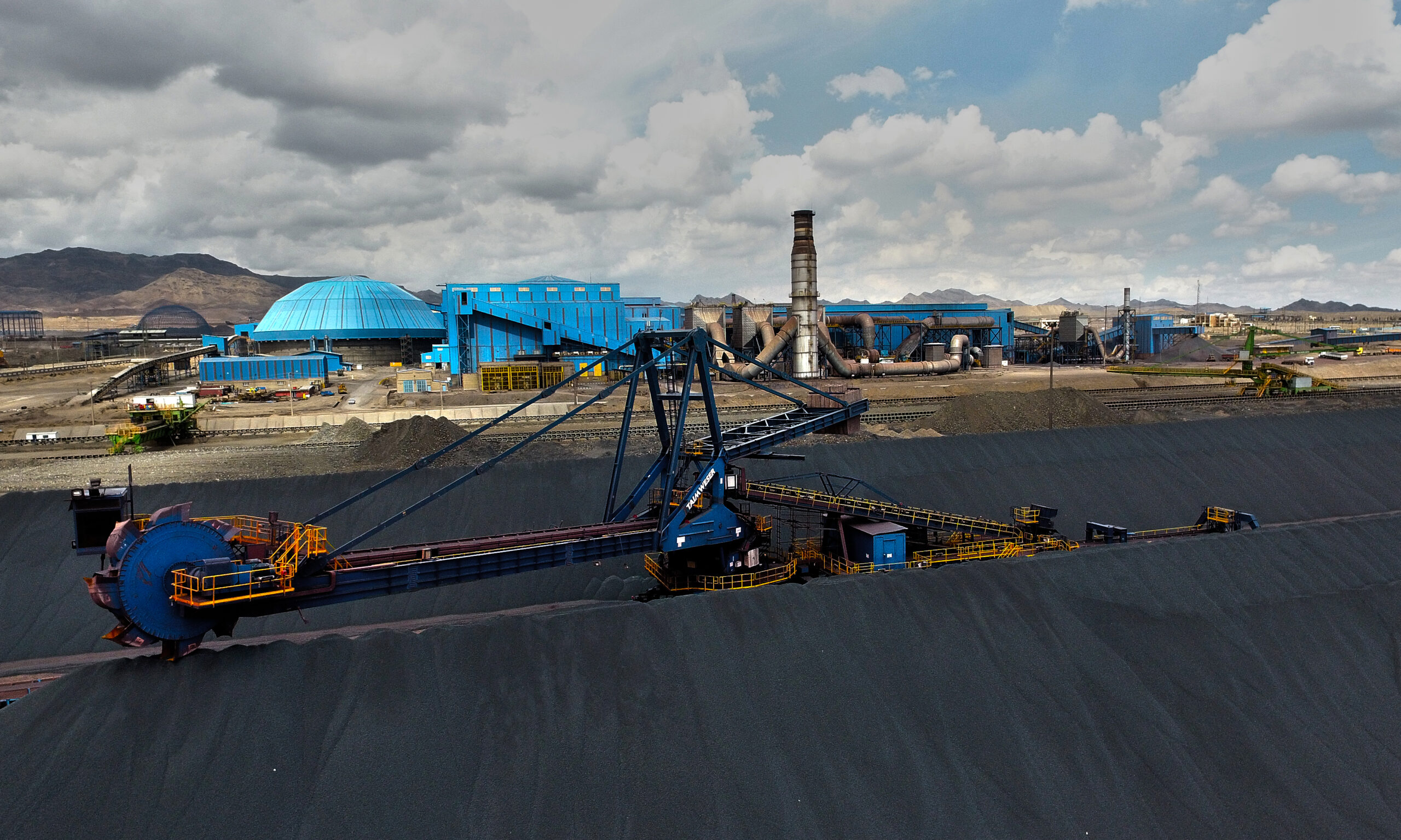
Another important dimension is what happens after production. A plant may produce an excellent product, but if customers face truck queues, long waiting times, loading errors, weighing problems, or transport difficulties, part of their satisfaction is lost. In Shahrivar of the current year, Sangan steel company focused on this stage by commissioning the truck-loading facility at its pelletizing plant to expand product-transport and dispatch infrastructure and improve customer satisfaction.
The facility is designed to load 3.2 million tonnes of pellets annually. Its features include three truck-loading lanes, accurate weighing systems, load-distribution controls, the ability to accommodate different types of trailers, and a redesigned pellet-transfer route. The nominal transfer capacity to the loading facility has been announced at 1,600 tonnes per hour. These figures may appear technical, but they have a clear economic purpose: reducing waiting times and ensuring more orderly deliveries.
A technical change to the chute system is also important in this respect. A stepped chute has been used instead of a telescopic chute to reduce the drop height of the pellets and consequently minimize breakage. The loading process has therefore been designed to preserve product quality as it leaves the plant. This is where production quality connects directly with the customer experience. Sangan steel’s customers receive not only a product but also a combination of quality, accuracy, timeliness, and reliability.
A Reliable Market Through a More Diverse Customer Base
Sangan steel company has also adopted a broader approach to sales markets in recent months. It has maintained relations with its core and traditional customers while seeking other markets to reduce sales risk. Some products are supplied through value-chain partnerships, some through domestic and foreign markets, and others through the commodity exchange. This approach gives a wider range of customers access to the company’s products.
From a customer-centric perspective, this has a subtle but important implication. A company dependent on a single customer or market may not have sufficient flexibility under all conditions. Market diversification allows a producer to maintain relationships with different customers while responding more flexibly to market changes. The reason customers choose Sangan steel company cannot be summarized as quality alone. Quality is the starting point, but customer loyalty depends on consistent quality, products tailored to requirements, and timely delivery through an orderly process.
Reports from the summer of 1405 complete this picture: from quality engineering and continuous monitoring of product specifications to investment in loading and transport, the initiatives form parts of one integrated system. The result is more than higher sales; it is trust in a relationship that carries substantial economic value in the steel chain. Sangan steel company still faces challenges, including iron ore and energy supply, and the stability of these two factors is essential to making full use of production capacity. From the customer’s perspective, however, the priority is that the producer preserve quality and delivery discipline as far as possible despite such constraints.
Customer centricity at Sangan steel company is therefore more visible in operational details than in slogans: in a laboratory that takes data reliability seriously, in a production line that continuously monitors quality, and in a loading facility intended to improve delivery time and accuracy. In industrial markets, these details gradually build trust; when combined with consistent quality, trust can keep customers with a producer for the long term.
Sangan: One of the Country’s Major Mining and Mineral-Industry Hubs
Ali Rasoulian, Chief Executive Officer of Sangan steel, attended a meeting with the Minister of Industry, Mine and Trade, representatives of the industrial and mining sectors, and senior industry executives at the Iran Chamber of Commerce. Presenting his views on behalf of the sector, he emphasized the need to develop mineral reserves in parallel with strengthening transport and energy infrastructure and completing the value chain through to direct reduced iron production.
Rasoulian said that, following the expansion of exploration activities in the Sangan region and the identification of new reserves over the past two years, the mine had become the largest iron ore mine in the Middle East. He therefore called for particular attention to be paid to the mine and to the development of mineral industries in the region. Exploration-capacity growth, he noted, would not be effective without adequate infrastructure, including rail and road networks, water, and energy.
He added that Sangan is one of the country’s major centres of mining and mineral-industry activity. The expansion of exploration in recent years has made it increasingly important to reassess the region’s infrastructure capacity. From an economic perspective, an increase in accessible reserves can lead to higher production, employment, and value added only when supporting infrastructure is developed across the chain, from extraction and processing to the manufacture of final products.
Speaking on behalf of the industrial, mining, and mineral-processing sectors, the CEO highlighted two fundamental priorities: infrastructure development and deeper value-chain integration. These priorities are technically and economically interdependent. Increasing extraction capacity without reliable access to transport routes, energy, and water can raise production costs and leave part of the mine’s potential capacity unused.
In transport, Rasoulian identified the expansion of rail lines and improvement of the road network as essential prerequisites for scaling up mining operations. Minerals and intermediate steel products require substantial movement volumes and therefore depend heavily on rail and road transport. Increasing loading capacity, connecting mines and processing plants effectively to the rail network, and upgrading roads can reduce logistics costs, improve supply-chain reliability, and ease transport bottlenecks.
He also said that the development of mineral and steel industries—particularly processing and DRI production—requires continuous and reliable access to electricity and natural gas. Increasing nominal production capacity without securing a stable energy supply does not necessarily lead to higher actual output. Seasonal restrictions and energy imbalances can affect production schedules, equipment productivity, and the economics of investment projects.
Rasoulian described completion of the steel production chain in Sangan as strategically important. If mineral resources are extracted and sold only at the initial stages of the chain, a substantial share of potential value added will be created further downstream. Developing processing and direct-reduction facilities near the mines can enable part of the region’s mineral capacity to be converted into higher-value products. Achieving this objective, however, requires infrastructure, investment, technology, and energy to be secured simultaneously.
He concluded by emphasizing the need to develop rail and road infrastructure, secure gas, electricity, and water supplies, and deepen the value chain through to DRI production. The objective is to convert Sangan’s exploration potential into actual production capacity and value added in the mining and mineral industries