

1- From Plant to Mine: Why Entry into Mining Is a Strategic Move
For Sangan steel, control over raw-material supply has become a strategic requirement. Any decline in feedstock availability can directly affect concentrate production and, subsequently, pellet output. Acquiring mining machinery is therefore more than the purchase of heavy equipment: it is a way to turn part of the risk associated with feedstock supply from an external variable into one that can be managed within the company.
The Risk of a Feedstock Shortfall: The Main Economic Driver
One of the strongest economic reasons for Sangan steel’s entry into mining is the gap between the plant’s actual requirements and the volume of feedstock available from existing sources. A reduction in extraction or in the delivery of ore can create a significant shortfall. For a large processing facility, this is not a minor issue: it can constrain production capacity, increase the cost of purchasing raw materials from alternative sources, and affect production and sales plans. Entry into mining is thus becoming less a discretionary development choice and more a necessity for managing operational risk.
An In-House Fleet: Greater Direct Control
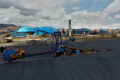
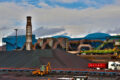
An in-house mining fleet enables Sangan steel company to reduce dependence on external contractors and equipment and to intervene directly when extraction or transportation is disrupted. Although this appears to be an operational advantage, in practice it can become a major production-management tool. The company can evolve from a concentrate and pellet producer into an integrated operator managing part of the chain from mineral reserves and extraction through to concentrate and pellets.
This development has three strategic implications: first, stronger feedstock security and a lower risk of reduced plant utilization; second, greater control over raw-material quality and cost; and third, the creation of long-term mining assets that can increase the company’s economic value beyond the capacity of its existing plants.
Realizing this outlook, however, requires more than having equipment at a mine. Sangan steel company must move towards scientific mine management, reserve development, exploration, long-term extraction planning, and a diversified portfolio of iron ore sources.
The company’s move into mining reflects a basic but decisive reality: a steel producer without sufficient control over its feedstock remains exposed to production risk, even if it has the best processing equipment. Although Sangan steel company operates in a region with substantial iron ore reserves, the main bottleneck is increasingly shifting from geological resources to the ability to extract and deliver ore continuously. Purchasing and deploying mining machinery, direct participation in operations, mining partnerships, acquisition of mines, and exploration should be viewed as components of a single strategy: bringing feedstock control from outside the company into its management chain.
If accompanied by reserve development, scientific mining, an efficient fleet, and diversified iron ore sources, this strategy could transform Sangan steel company from a major processing operation in eastern Iran into an integrated player in Iran’s mining and mineral industries. Its success will depend on coordination among overburden removal, extraction, loading, transportation, and processing. Participation in extraction, acquisition of iron ore mines, exploration and development projects, procurement from regional mines, and alternative feedstock sources could represent the next steps. Diversification matters because dependence on a single mine—even a very large one—carries risks related to technical extraction problems, changes in the operator’s plans, delays in overburden removal, transport difficulties, and pricing policies. Ownership or participation in several mineral sources can distribute these risks.
Making Use of Low-Grade Reserves
Sangan steel’s development potential is not limited to high-grade iron ore. Part of the future of the iron ore industry depends on the economic exploitation of low-grade and hematitic reserves. As mines become deeper and extraction conditions more challenging, these resources may become increasingly important. Greater mine depth generally increases the stripping ratio and makes extraction more complex and costly. Under such conditions, mine economics become more dependent on processing technology, recovery of low-grade ore, and optimization of cut-off grades.
Sangan steel company can therefore expand its mining operations while also upgrading its processing technologies for low-grade reserves, effectively increasing the range of resources it can use. A major strength is its geographical position: the company’s plants are located in the Sangan district of Khaf, adjacent to one of Iran’s largest iron ore centres. This proximity offers several direct advantages, including shorter transport distances, better alignment of feed grade with plant requirements, lower safety-stock requirements, faster responses to production-plan changes, and reduced logistics costs. In modern mining, the value of a reserve depends not only on grade and tonnage but also on its distance from the processing plant and the available transport infrastructure.
Sangan steel’s move upstream is part of a broader trend in which major steelmakers seek to make their raw-material resources more secure, diversified, and controllable. As national steel capacity expands and access to ready-to-mine reserves becomes more difficult, this approach is likely to become increasingly important. If the company continues to develop its mining activities, its business model could change significantly in the coming years.