

Sangan steel companyTargets Full Pelletizing Capacity as Feedstock and Energy Security Remain Key Challenges
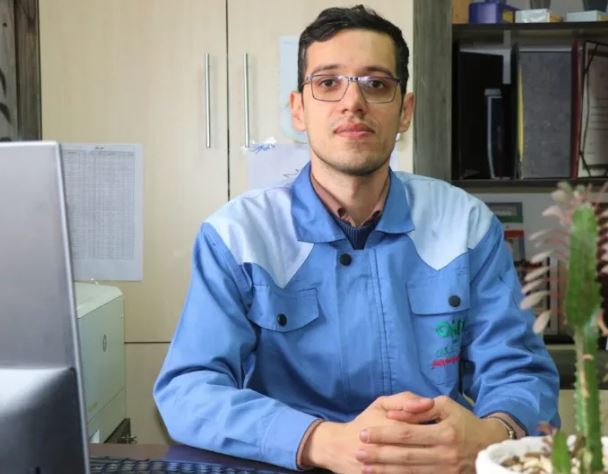
Mehrdad Shokouhi, Manager of Sangan steel company’s Pelletizing Plant
Sangan steel company’s pelletizing operation has the technical capability to produce more than 15,000 tonnes of pellets per day, but constraints on concentrate availability and energy supply continue to limit the plant’s ability to consistently operate at full capacity, according to Mehrdad Shokouhi, Manager of Sangan steel company’s Pelletizing Plant.
Shokouhi said the plant is currently operating with a high level of equipment readiness and process capability, with daily production exceeding 15,000 tonnes of high-quality pellets. With sufficient feedstock availability, he added, the facility has the potential to operate at its maximum capacity and, under appropriate operating conditions, even exceed its nominal capacity.
The plant produced approximately 1.8 million tonnes of pellets during the first five months of 1405, according to Shokouhi. However, he emphasized that the principal constraint on production is not the pelletizing process itself or the availability of production equipment, but the reliability of the upstream raw-material supply chain.
Upstream Constraints Put Pressure on Pellet Production
According to Shokouhi, restrictions affecting mining and iron ore extraction operations have reduced the volume of ore delivered from the mine. The impact is then transmitted through the production chain, reducing concentrate availability and ultimately limiting the feedstock supplied to the pelletizing plant.
“This creates a chain effect across the production system,” Shokouhi explained, noting that lower ore availability can translate into lower concentrate production and, subsequently, constraints on pelletizing operations.
He said the performance recorded during the first five months of 1405 indicates that achieving the full-year production target will be challenging under current conditions.
Two factors are particularly critical: the availability of concentrate and the risk of natural gas restrictions during the autumn and winter months.
For a high-capacity pelletizing operation, continuity of feedstock and energy supply is essential. Even where process equipment is fully available, interruptions upstream can prevent the plant from maintaining stable, high-rate operation.
Natural Gas Security and Production Continuity
Natural gas availability represents a particularly important seasonal risk for steel and pelletizing operations in Iran.
Shokouhi said increased residential and commercial gas consumption during the cold season can result in restrictions on industrial gas consumption and, in some circumstances, interruptions in supply. Such restrictions can reduce production rates and potentially lead to temporary shutdowns of the pelletizing line.
He highlighted provincial gas-efficiency initiatives as one potential mechanism for improving the reliability of industrial energy supplies, referring to programs aimed at replacing conventional heating equipment with high-efficiency heaters.
If the resulting gas savings are effectively realized and the saved volumes are allocated to industrial users, part of the pressure on gas supplies to the steel sector could be reduced, Shokouhi said.
Sangan steel companyis also pursuing projects aimed at increasing the resilience of its energy supply. These include planned CNG/ANG compressed-gas storage projects, as well as future LNG or LPG storage solutions, under the company’s Development and Technology Division.
Shokouhi stressed, however, that industrial projects alone cannot resolve the country’s broader energy imbalance.
“Long-term industrial production requires a shift toward reliable and sustainable energy-supply mechanisms at the national level,” he said, emphasizing the importance of broader energy-sector policy and infrastructure.
Concentrate Availability Emerges as a Second Bottleneck
Alongside energy, concentrate availability has emerged as another major constraint on the plant’s ability to sustain high production rates.
Shokouhi said limitations affecting mining and iron ore extraction have reduced access to raw ore, creating challenges for domestic concentrate production and increasing fluctuations in the supply of pelletizing feedstock.
One response has been to utilize the capacity of other mines and procure concentrate from external sources.
“Securing part of the concentrate deficit from external sources can help prevent a decline in pellet production and keep the production line operating at the highest possible utilization rate,” Shokouhi said.
He added that this approach is already being implemented by Sangan steel companyas part of efforts to maintain production continuity.
Capacity Utilization and Cost Competitiveness
The consequences of feedstock shortages extend beyond production volumes.
According to Shokouhi, insufficient concentrate supply reduces the stability and continuity of operations, preventing the plant from maintaining full-capacity production on a sustained basis and leaving part of its available capacity underutilized.
Fluctuating feedstock availability also complicates production planning and operational scheduling. At the same time, lower production volumes can increase the unit cost of pellets by spreading fixed operating costs over a smaller production base.
Winter gas restrictions could add another layer of uncertainty. Reduced gas availability may lower production rates or trigger temporary shutdowns, limiting the plant’s ability to recover accumulated production shortfalls during the final months of the year.
For this reason, securing stable feedstock and energy supplies is not simply a matter of maintaining output; it is also directly linked to capacity utilization, operating efficiency and production economics.
Gas Storage to Strengthen Operational Resilience
The planned gas-storage project is expected to provide an additional layer of protection against fluctuations in gas supply.
Shokouhi explained that during periods of reduced gas pressure or supply restrictions, stored gas could cover part of the plant’s requirements, helping maintain operations and reduce the risk of production losses or line shutdowns.
Such infrastructure could therefore strengthen the plant’s operational resilience by providing a buffer between external energy-supply fluctuations and the continuous requirements of the pelletizing process.
Hematite Concentrate Project to Diversify Feedstock Suppl
The planned hematite concentrate plant is another project expected to contribute to the resilience of Sangan steel company’s raw-material supply chain.
Shokouhi said the project could provide part of the feedstock required by the production chain and reduce dependence on currently constrained sources of concentrate
However, he emphasized that hematite concentrate cannot simply be treated as a direct substitute for the magnetite-based feedstock currently used in the pelletizing process.
Because of differences in concentrate characteristics and process behavior, the appropriate proportion of hematite concentrate in the pelletizing feed must be determined according to its specific properties and the operating conditions of the production line.
From Installed Capacity to Sustainable Production
The experience of Sangan steel company’s pelletizing plant highlights a broader issue facing high-capacity mining and steel operations: installed production capacity does not automatically translate into sustained output.
The ability to consistently utilize capacity depends on the reliability of the entire production chain—from mine extraction and concentrate production to energy supply, process stability and logistics.
For Sangan steel company, securing a stable flow of concentrate while strengthening energy resilience could therefore be critical to closing the gap between available pelletizing capacity and sustained production performance.