


Sustained Production and Higher Equipment Availability: Sangan steel company’s Operational Priorities Across the Concentrate and Pelletizing Chain
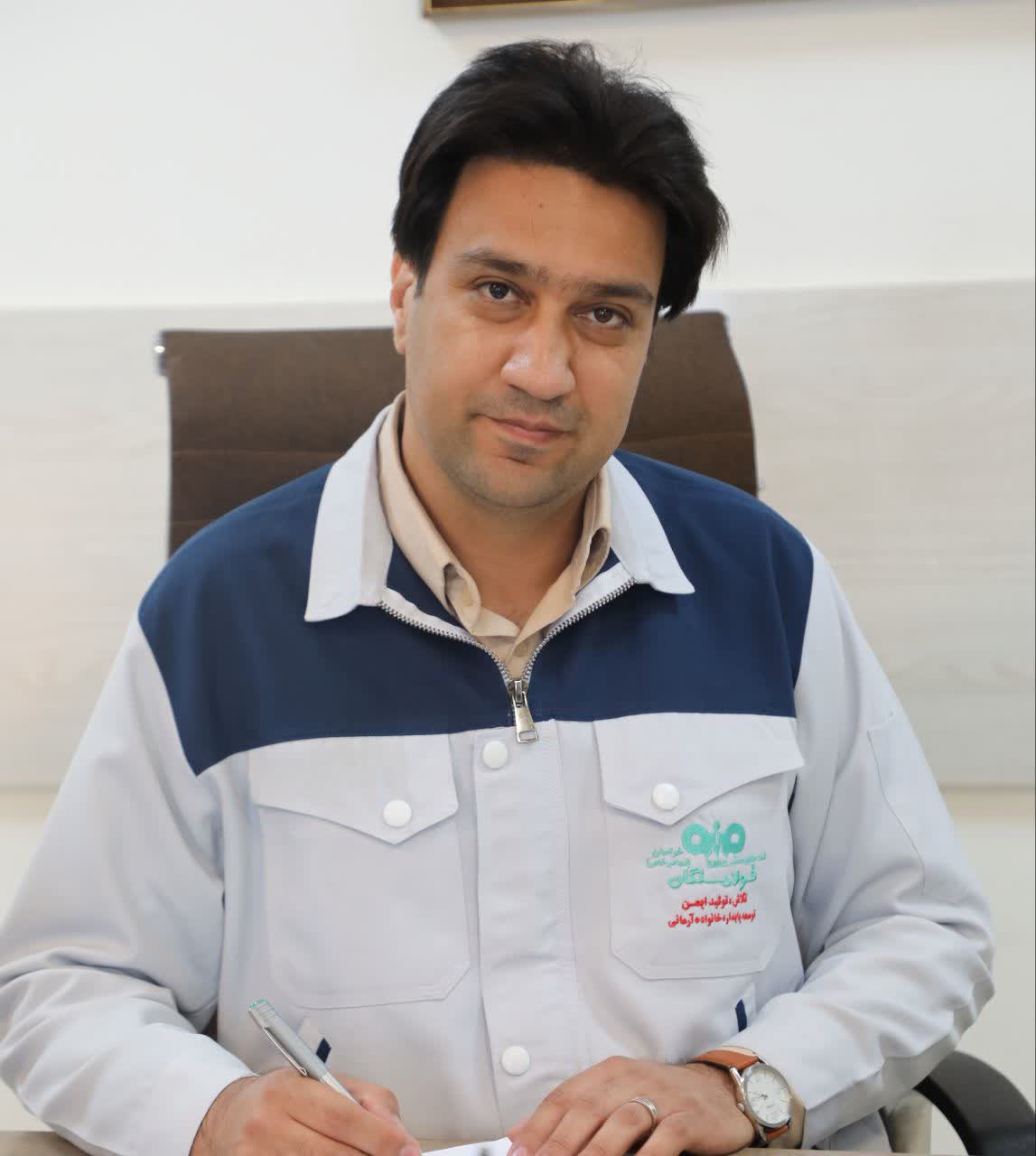
Ali Sobiyni, Deputy for Operations
Ali Sabiyni, Deputy for Operations at Sangan steel company, outlined the company’s key operational programs and measures for 2026, emphasizing that the company’s primary focus is on stabilizing production, increasing equipment availability, reducing unplanned downtime, and improving operational efficiency across its concentrate and pelletizing plants.
According to Sabiyni, maintaining economically viable production amid energy constraints and raw material supply challenges requires rigorous equipment management, reliable access to strategic spare parts, and the systematic removal of operational bottlenecks.
Sabiyni noted that concentrate and pellet production capacity is directly dependent on a stable supply of feedstock, stating that constraints in the supply of run-of-mine iron ore lumps, together with declines in feed quality in terms of grade and recovery, are among the key factors affecting the extent to which the plants can achieve their nominal production capacity.
Accordingly, part of Sangan steel company’s operational strategy has focused on strengthening the feedstock supply chain and reducing the associated supply risks.
He added that participation in the supply of blasting materials and heavy machinery required for iron ore extraction, as well as the procurement of iron ore from placer mines, are among the measures being pursued to support production continuity. Despite these measures, final production volumes remain directly dependent on the availability and quality of incoming raw materials.
The Deputy for Operations at Sangan steel company identified increasing equipment availability as one of the company’s key production priorities, saying that the identification of bottlenecks across production lines, together with optimization initiatives and under-roof expansion projects at the concentrate and pelletizing plants, will enhance operational capacity and strengthen the plants’ ability to operate reliably and continuously.
Provided that sufficient feedstock is available, the plants will have the potential to reach, and potentially exceed, their nominal production capacity.
Sabiyni continued: Reducing emergency shutdowns, carrying out specialized maintenance, and refurbishing strategic components—particularly those whose procurement is subject to supply constraints—are among the key priorities in the operations area.
He added that, as part of this approach, the procurement strategy for certain spare parts has been changed from annual to two-year ordering cycles, with the aim of reducing supply risks and preventing production-line stoppages.
Sabiyni identified energy constraints as one of the major concerns facing industrial producers in the region and said that, as part of efforts to optimize heating systems, the company has adopted a replacement and investment strategy focused on installing energy-efficient, Grade A heaters in place of high-consumption and low-efficiency units.
He noted that, in addition to contributing to this major initiative, the measure has generated significant operational savings and will help secure part of the plant’s gas requirements during the winter peak-demand period.
Regarding electricity supply, Sabiyni said that, to address part of the challenges associated with electricity supply, strategic investment in renewable energy has been placed on the company’s agenda. Planning has been carried out and the project to establish a 200-megawatt wind power plant has been initiated. In addition, the acquisition of shares related to electricity supply has been undertaken.
These measures are aimed at optimizing energy efficiency and enhancing the resilience of the company’s energy systems.
Referring to measures implemented at the pelletizing plant, Sabiyni said the use of online monitoring systems based on image processing has enabled continuous monitoring of selected equipment and processes.
In the green pellet formation area, continuous monitoring has contributed to improving the efficiency of pelletizing discs and achieving an efficiency rate of more than 90 percent.
He added that intelligent monitoring of pallet car health has provided a basis for maintenance and replacement planning, contributing to higher equipment availability, lower spare-parts consumption, and improved energy efficiency in the furnace.
The Deputy for Operations at Sangan steel company also emphasized the role of data and automation in improving production-line performance.
By leveraging the expertise of PLC specialists, the production-line HMI is continuously optimized, ensuring that the signals required for process control and line monitoring are readily available through the HMI.
He added that laboratory data, PLC outputs, and statistical analyses using Minitab software are also utilized to identify improvement opportunities and support technical decision-making throughout the production process.
Sabiyni identified the return of water from the tailings dam to the concentrate plant as another effective operational initiative.
The project, which commenced at the end of 2025, was fully commissioned in May 2026 and has enabled a significant volume of water to be returned to the production cycle. The initiative is operationally important from the perspectives of process sustainability and water-resource management.
Referring to corrective measures implemented on process equipment, he added that modifications and optimization of the mill liner design, as well as changes and optimization of the crusher concave design, were among the measures implemented to reduce downtime and operating costs.
These measures, alongside specialized maintenance and condition monitoring of equipment, form part of Sangan steel company’s broader approach to enhancing the reliability of its production lines.
Sabiyni concluded: Sangan steel company’s priority in 2026 is sustainable and economically viable production. This objective is being pursued through higher equipment availability, reduced downtime, improved feed quality and supply stability, energy consumption management, reliable procurement of strategic spare parts, and the use of data-driven monitoring systems.
Within this framework, every improvement in equipment reliability and every reduction in downtime will directly contribute to sustaining concentrate and pellet production and enabling more effective utilization of the plants’ production capacity.