Related news


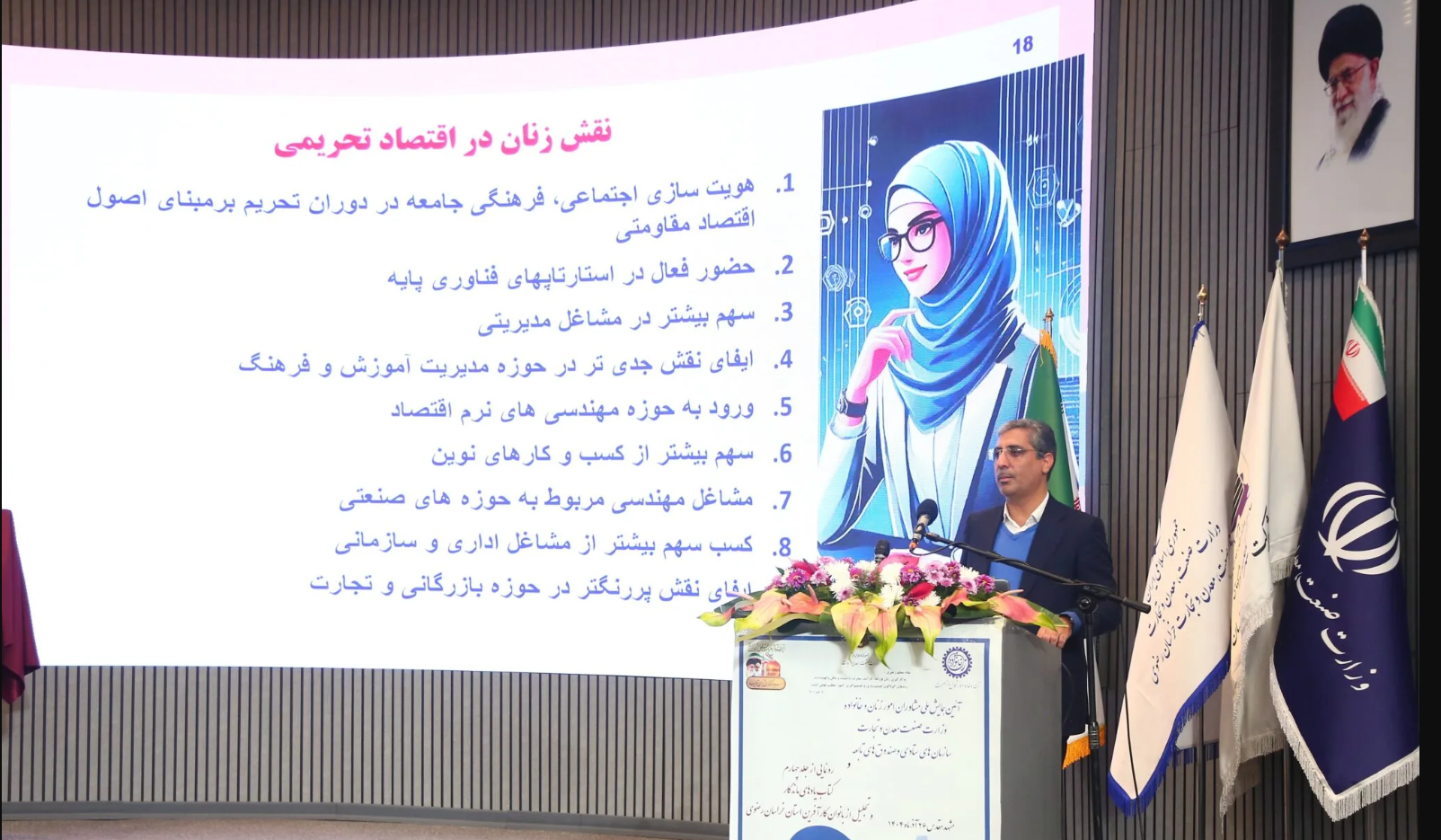
Ali Rasoulian; CEO of Sangan Steel Mining Industries Company (SSMIC): Social Identity Formation by Women and Playing a Serious Role in the Sanctioned Economy
The National Conference of Advisors for Women and Family Affairs of the Ministry of Industry, Mining and Trade was held in Mashhad, with the attendance of national officials and a group of women advisors and entrepreneurs of the country. At this conference, Ali Rasoulian, CEO of Sangan Steel Mining Industries Company (SSMIC), in his speech presenting a report on the global economy, said: The world’s gross domestic product in 2025 is estimated at over 115 trillion dollars, with Iran’s share of the global economy being modest at approximately 464 billion dollars. Rasoulian listed the intensification of geopolitical tensions, fluctuations in energy and gold markets, etc., contractionary fiscal policies, high inflation, high interest rates, high global debt levels, and policy-making problems as the most significant economic risks on the global stage, which can seriously impact the conditions of economic enterprises and growing countries.
He added: Based on some reports, Iran holds the 37th rank in the world economy and is thus placed in the category of medium-sized economies. While in 2005, Iran’s GDP based on the PPP index was 1.07 trillion dollars, countries such as Saudi Arabia and Turkey had GDPs of 900 billion dollars and 1.3 trillion dollars respectively in the same year. Due to attracting foreign investment, developing non-oil sectors, and achieving higher added value, they were able to revitalize their economies. Iran, given its high potential, can also achieve this.
The CEO of Sangan Steel Mining Industries Company (SSMIC), referring to the non-oil sector in recent decades, stated: The share of the non-oil sector has not grown in step with oil in the country’s economy, and this sector is currently being strengthened through a formulated strategy. He subsequently addressed the pathology of the effects of sanctions on the country’s economy and said: Sanctions have had an adverse effect on the country’s economy and have delayed the nation’s economic growth and development process, to the extent that we witness an increase in foreign investment risk alongside rising transaction and trade costs, and a decrease in oil and petroleum product exports. These factors can lead to increased dependence on the informal economy. Currently, regional agreements are among the models that play a very serious role in the global economy. Iran’s presence in the Shanghai Cooperation Organization and BRICS has placed good opportunities before the country’s economy, as Iran is a large and influential country with great potential for flourishing.
Ali Rasoulian identified the inflation rate, the multi-tiered currency exchange rate, lack of transparency in policy-making, administrative bureaucracy, weaknesses in energy, logistics, and transportation infrastructure, shortage of domestic and foreign investment, and limited access to modern technologies as the most important causes of Iran’s economic underdevelopment. He added: Currently, the future of Iran’s economic conditions is assessed positively. Considering the multifaceted potential of Iran’s economy, it is possible, with precise scientific planning, to move more rapidly towards bright future horizons.
The CEO of Sangan Steel Mining Industries Company (SSMIC), analyzing the state of the global industry and manufacturing sector, added: International sanctions and a single-product economy are major challenges at the macro level of the steel industry. Due to problems in the area of industrial infrastructure and energy imbalance, among other factors, we have fallen short of the vision of producing 55 million tons of steel by the end of 1404 (2025/2026).
He enumerated the decrease in exports, technology and raw materials, and the increased cost of importing inputs and machinery as factors affecting the country’s industrial exports and said: While the world is moving towards the production of green and hydrogen-based steel, we have no choice but to access modern technologies for production and competition in the global market. We must seriously and with targeted planning enter this field. It is gratifying that, relying on the technical expertise of the country’s young engineers, this process has begun, and Iran remains among the top ten steel-producing countries in the world.
This senior industry manager of the country, referring to the decrease in steel productivity coefficient last year and a 16% lag behind the global average steel rate, said: This caused over 2 billion dollars in losses to the steel industry. If we consider the lost opportunity benefits resulting from energy imbalance, which amount to over 15 billion dollars from 1400 (2021/2022) until now, the figure is very high. Had this amount been available, it would have created a major leap for the country’s industrial development projects.
The CEO of Sangan Steel Mining Industries Company (SSMIC) considered the country’s mining sector, with 7% of global reserves, as one of the serious economic potentials that requires special attention. This would not only diversify the country’s economy and move towards reducing dependence on the oil sector but also open new horizons for exports and foreign currency earnings. He described Iran as a unique country in terms of geographical and climatic diversity, economic market, tourism, and human resources, each of which can be a powerful driving force in the national economy.
Referring to solutions in the current economic conditions, Rasoulian said: By reforming economic governance, we must seek diversification of export markets, domestic technology development, increasing productivity and reducing costs, and utilizing alternative financial mechanisms under specific circumstances. Subsequently, by strengthening the domestic supply chain, intelligent financial and currency management, international branding and marketing, along with negotiating with economic partners and membership in regional agreements, we can enhance social resilience and human capital, and increase economic productivity to the necessary level.
In another part of his speech, the CEO of Sangan Steel Mining Industries Company (SSMIC), referring to the effective role of women in the economy and production cycle, stated: Currently, women’s share in the country’s economy is about 15 percent, which is low compared to the global standard rate. However, in recent years, wherever an opportunity for role-playing in the country’s economy has arisen, Iranian women have been present in a timely and effective manner, such that this indicator is growing well.
Rasoulian continued: Women account for 76 percent of the world’s working hours, while constituting one-third of the formal workforce globally. Out of 550 million low-income workers worldwide, approximately 330 million (about 60 percent) are women. Referring to future global transformations, he said: In the future, the greatest demographic change in the labor market will occur among women, such that they will play a far greater role in the economy and management of various fields.
At the conclusion of his address, this senior industrial manager of the country, referring to the valuable presence of women in the economy during the sanctions era, spoke of the important role of women in the social and cultural identity formation of society during sanctions based on the principles of a resistance economy. He stated: Conditions are more ripe than ever for a more serious presence of women in the country’s economy. Capable Iranian women can have a more substantial presence in technology-based startups, managerial positions, education and culture management, the field of soft engineering in economy and industry, new businesses, and the commercial, financial, and administrative sectors. This would not only allow women to benefit from a valuable role in the social sphere but also enable us to utilize the capabilities of the country’s competent women in productive, industrial, and economic sectors.