

Sangan steel company and the Architecture of Sustainable Water Supply
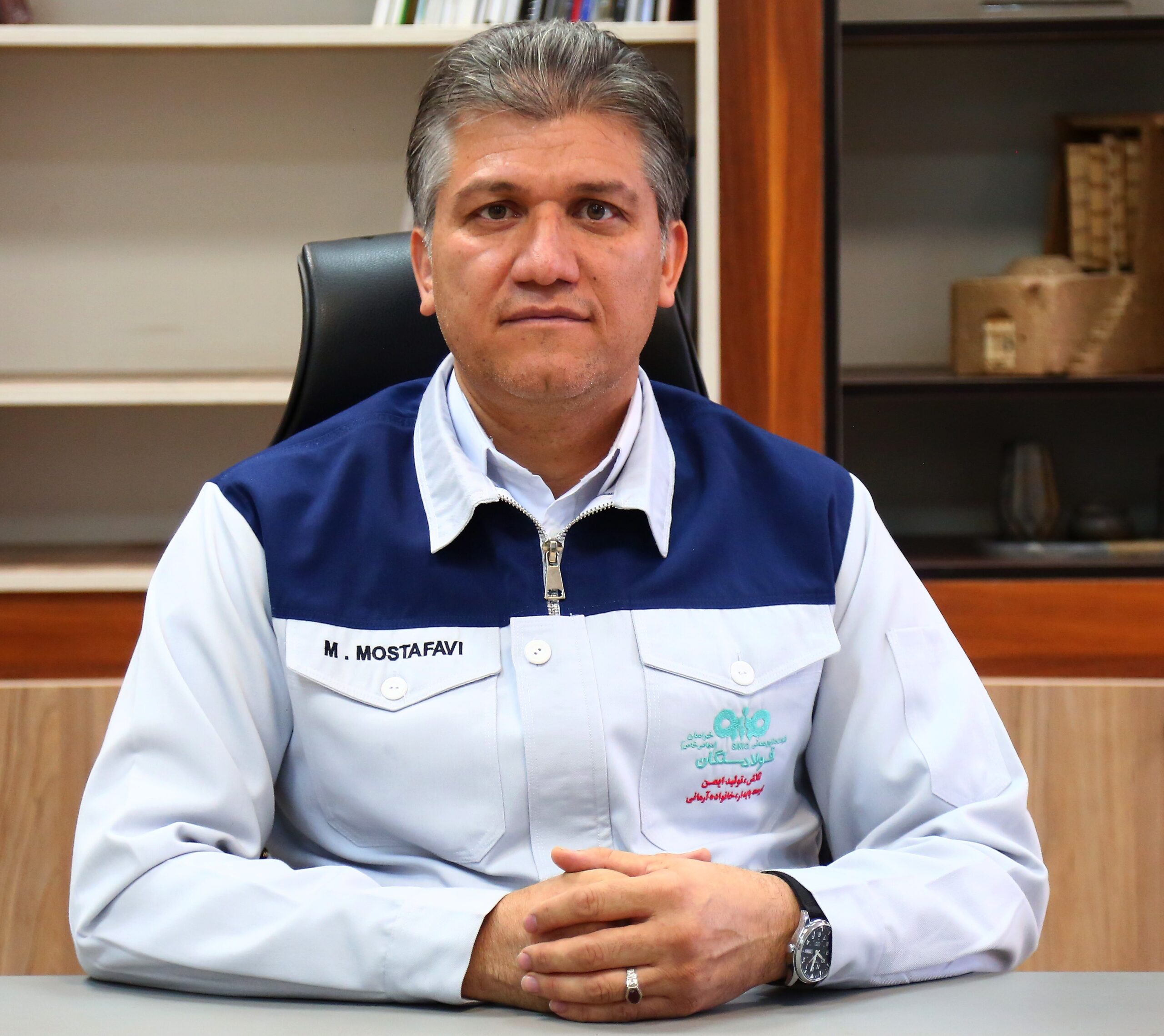
Majid Mostafavi – Deputy for Development and Technology, Sangan steel company
The operations of major mining and steel producers have always involved a delicate balance between expanding industrial capacity and safeguarding environmental resources. In Iran, this challenge is particularly significant due to climatic conditions and infrastructure constraints.
With two five-million-ton-per-year production lines for concentrate and pellets, Sangan steel company Mining & Industrial Company needs to develop and implement water consumption and supply models that can sustain its operations without exposing nominal production capacities to increasing operational risks.
Given the environmental sensitivities involved, protecting basic natural resources and securing the continuity of 10 million tonnes of processing capacity require water-supply strategies to move away from concentrated, single-source models toward sustainable and circular solutions.
Building a Sustainable Water-Supply Infrastructure
Sangan steel company’s most significant practical measure in the area of resource sustainability has been its investment in the collection and transfer of urban wastewater from the surrounding region. This comprehensive infrastructure project includes the construction of a wastewater collection network in the city of Taybad, comprising 17,000 connections; the construction of an advanced wastewater treatment plant with a daily capacity of 12,000 cubic metres; and the installation of a total 82-kilometre transfer pipeline, to be implemented in two phases of 30 and 52 kilometres.
Once the transfer system is fully operational, it will provide the complex with 8.5 million cubic metres of treated water suitable for industrial use each year. Under current conditions, this volume could cover approximately half of the annual water requirements of Sangan steel company’s production units.
Water Economics Across the Processing Chain: Balancing Cost and Production Continuity
Assessing the economic efficiency of industrial water projects goes well beyond simply dividing capital investment by cubic metres of output. The real cost of water is determined by the combined impact of initial capital expenditure (CAPEX), operating and maintenance costs (OPEX), electricity consumption for pumping, depreciation of equipment and structures, and transmission costs. However, the key variable in determining the economic rationale of such projects is the value of water-supply reliability.
For Sangan steel company, a realistic strategy is to establish a “multi-source water portfolio” comprising short-, medium- and long-term supply options.
Under this integrated model, the first line of supply relies on the recycling of internal wastewater and the treatment and reuse of process water. The second layer involves the use of treated municipal wastewater from Taybad, which strengthens production resilience. In the longer term, participation in strategic mega-projects, such as water transfer from the Sea of Oman, can complete the supply chain.
The main advantage of diversifying water sources is the reduction of risk associated with disruption at any single source and the creation of a sustainable operational safety margin.
Managing Operational Risks and the Resilience of Water-Transfer Systems
Designing industrial water-transfer systems over long distances requires the anticipation of contingency scenarios to mitigate technical risks. In the event of grid power outages, the provision of emergency generators and the classification of critical pumping-station equipment can preserve the minimum flow required by pumps and sensitive equipment. Similarly, the deployment of standby equipment and rigorous implementation of preventive maintenance (PM) procedures can minimize system downtime.
To address the risk of pipeline rupture or leakage along the 82-kilometre transmission route, the project incorporates advanced control valves for isolating damaged sections, intermediate storage reservoirs, and contingency bypass routes. Continuous monitoring of these processes will be supported by clearly defined key performance indicators (KPIs), enabling corrective measures to be activated before individual incidents develop into cascading disruptions.
Lessons from Infrastructure Development and the Outlook for Sustainable Production
Experience in advancing infrastructure and water-transfer projects shows that a significant share of implementation challenges is related to coordination with external organizations, land acquisition, obtaining regulatory approvals, and managing interfaces among multiple contractors. Integrated management of these interfaces, together with the early identification of long-lead equipment, is as important as field construction activities themselves.
Ultimately, redefining Sangan steel company’s water-supply model demonstrates that continued industrial development in eastern Iran will depend on technical discipline, diversified investment in water sources, and responsible stewardship of local water resources. In addition to improving public-health and urban infrastructure indicators in areas such as Taybad, this infrastructure model strengthens the operational stability of one of the country’s key mineral-processing complexes and provides greater resilience against climatic fluctuations.