



Sangan steel company on the Path to Energy Independence
€240 Million Investment in a 200 MW Wind Power Plant
Asad-Zadeh, Head of Electricity and Power Plant Projects at Sangan steel, outlined the company’s infrastructure initiatives aimed at strengthening the stability of its electricity network, reducing dependence on the external distribution grid, introducing intelligent consumption management, and expanding renewable energy. These initiatives are among the company’s key priorities in energy supply and management and are being pursued through investments amounting to hundreds of billions of tomans and millions of euros.
At a time when securing a reliable electricity supply has become one of the major challenges facing large industries in Iran, Sangan steel company has placed a series of strategic projects on its agenda. By developing electricity transmission and distribution infrastructure, improving the resilience of its internal network, and moving towards clean energy generation, the company is working to strengthen its energy security. The construction of five utility substations, implementation of a 33/20 kV substation, commissioning of a dispatching center, and planning for a 200 MW wind farm are among the measures intended to support intelligent energy management and a reliable electricity supply in the years ahead.
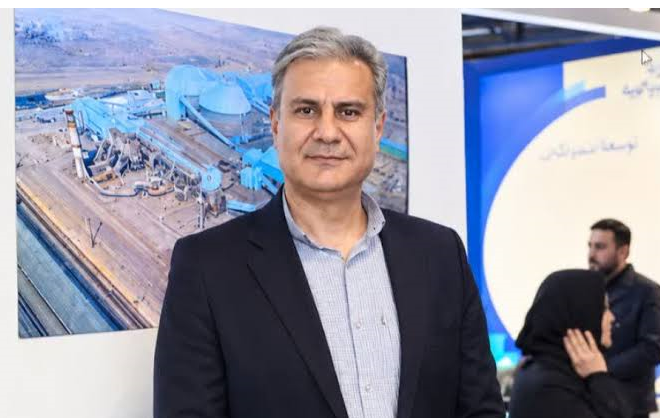
Speaking on the sidelines of the 20th Isfahan Steel Symposium, Seyed Asad Asadzadeh Birjandi, Head of Electricity and Power Plant Projects at Sangan steel, provided an update on the projects in this field. He said the company’s main approach to defining and implementing electricity projects was to ensure a stable energy supply, optimize consumption, and upgrade the electricity network infrastructure. Accordingly, a number of development and rehabilitation projects are under way to increase the company’s operational independence and reduce the vulnerability of its electricity network.
Referring to the construction of five utility substations, he said they had been designed to supply electricity to the company’s auxiliary and internal consumers and were now approaching the final stages of implementation. The project, with an investment of approximately 1.8 trillion tomans, had reached around 85–90% physical progress.
Asadzadeh also identified the 33/20 kV substation project as another major step towards strengthening the company’s internal electricity network. The project is intended to complete the 20 kV circuits and overhead lines within the site and reduce dependence on distribution lines outside the complex. Once this infrastructure is commissioned, the network will be capable of receiving power through two routes, significantly improving the reliability of the company’s electricity supply.
According to Asadzadeh, approximately 1.5 trillion tomans has been allocated for the substation. Although construction began only one or two months ago, a considerable part of the implementation work has already been completed.
Intelligent Energy Management Backed by a €900,000 Investment
The Head of Electricity and Power Plant Projects described intelligent consumption management as one of the main pillars of the company’s plans. Referring to the implementation of the DCS project, or dispatching center, he said access to accurate and continuous information on consumption is a fundamental prerequisite for improving and optimizing energy use. The dispatching center was therefore established to enable continuous monitoring of electricity-consumption data across the entire site.
He added that, in addition to collecting and analyzing consumption data, the system enables the stability of the network to be monitored and controlled. It also allows the company to make more effective use of the operators stationed at its substations and to manage energy resources and human resources in a more centralized and efficient manner.
Emphasizing the role of accurate data in identifying weaknesses in the network, Asadzadeh noted that electrical harmonics—particularly those associated with motor-driven loads—are a significant industrial concern. They can increase energy losses, create reactive-power problems, raise electricity costs, and accelerate the wear of industrial equipment and machinery.
He explained that data collected through the dispatching center identifies areas with severe harmonic distortion and sections requiring corrective action. Harmonic filters, network modifications, and the installation of capacitor banks can then be used to address these problems to a considerable extent. In addition to improving power quality and reducing energy costs, these measures can reduce equipment wear and extend the service life of machinery.
Asadzadeh said approximately €900,000 had been invested in the Sangan steel company dispatching center project, which has now been completed.
A 200 MW Wind Farm: A Major Step Towards Clean Energy
In another part of the interview, Asadzadeh described the expansion of renewable power-generation capacity as an important element of Sangan steel’s plans for future electricity supply. He said that, following completion of preliminary studies and the required permitting procedures, the company’s 200 MW wind farm project had entered the stage of preparing tender documents and selecting a contractor.
He added that the necessary permits and coordination had been pursued with the relevant authorities, including Tavanir, Khorasan Regional Electricity Company, and the Agricultural Jihad Organization, covering grid connection, land provision, and other project requirements.
The tender documents have been prepared under different contractual frameworks, including EPC and EPCF. The call for expressions of interest and the evaluation of applicant companies have also been completed. Based on contractors’ track records and capabilities, a shortlist of qualified companies has been drawn up to ensure a more rigorous selection process.
The estimated investment required to construct the wind farm is approximately €240 million. The project is currently at the tendering and contractor-selection stage and is expected to play an important role in diversifying the company’s energy supply portfolio and expanding the use of renewable resources.
The Energy Tunnel and Connection to the 400 kV Neishtifan Substation: Infrastructure for Future Projects
Referring to plans to supply electricity to the company’s development projects in the coming years, Asadzadeh said one of the key priorities was to make maximum use of the capacity of the 400 kV Neishtifan substation. Technical studies and tender documents for securing the maximum available demand from this substation have been prepared to provide the infrastructure required for the company’s future expansion.
He added that construction of an energy tunnel and the cable network required for electricity transmission had also been included in the plan. With an estimated investment of nearly €9 million, this is one of Sangan steel’s major infrastructure projects. Its tender documents have been prepared, paving the way for the contractor-selection process.
Continuous Consumption Monitoring: The Basis for Cost Reduction and Higher Productivity
Summing up the company’s energy-management measures, the Head of Electricity and Power Plant Projects stressed that effective improvement and optimization are impossible without an accurate understanding of consumption patterns. The dispatching center provides continuous and reliable information about the network and the company’s electricity consumers, enabling weaknesses to be identified and corrective measures to be implemented in a targeted manner.
He noted that harmonic control, power-factor correction, reactive-power reduction, improved power quality, and prevention of premature equipment wear are among the expected outcomes. Ultimately, these measures are intended to reduce energy costs and improve operational productivity.
According to the announced plans, Sangan steel company is seeking to establish a more stable and intelligent network aligned with its future development requirements through internal network expansion, construction of new substations, intelligent consumption management, development of a wind power plant, and the creation of electricity-transmission infrastructure from the 400 kV Neishtifan substation. Alongside reducing dependence on external electricity sources, this approach can support optimized energy management and strengthen the resilience of this major industrial complex against electricity-supply constraints.